Zombie AI Love Story Explained: The Hug and Memory Transition
Explore the four beats of a zombie AI love story and how a match cut turns an apocalypse embrace into a warm memory of the same pair.
Have your two photos ready? Create your zombie story ↗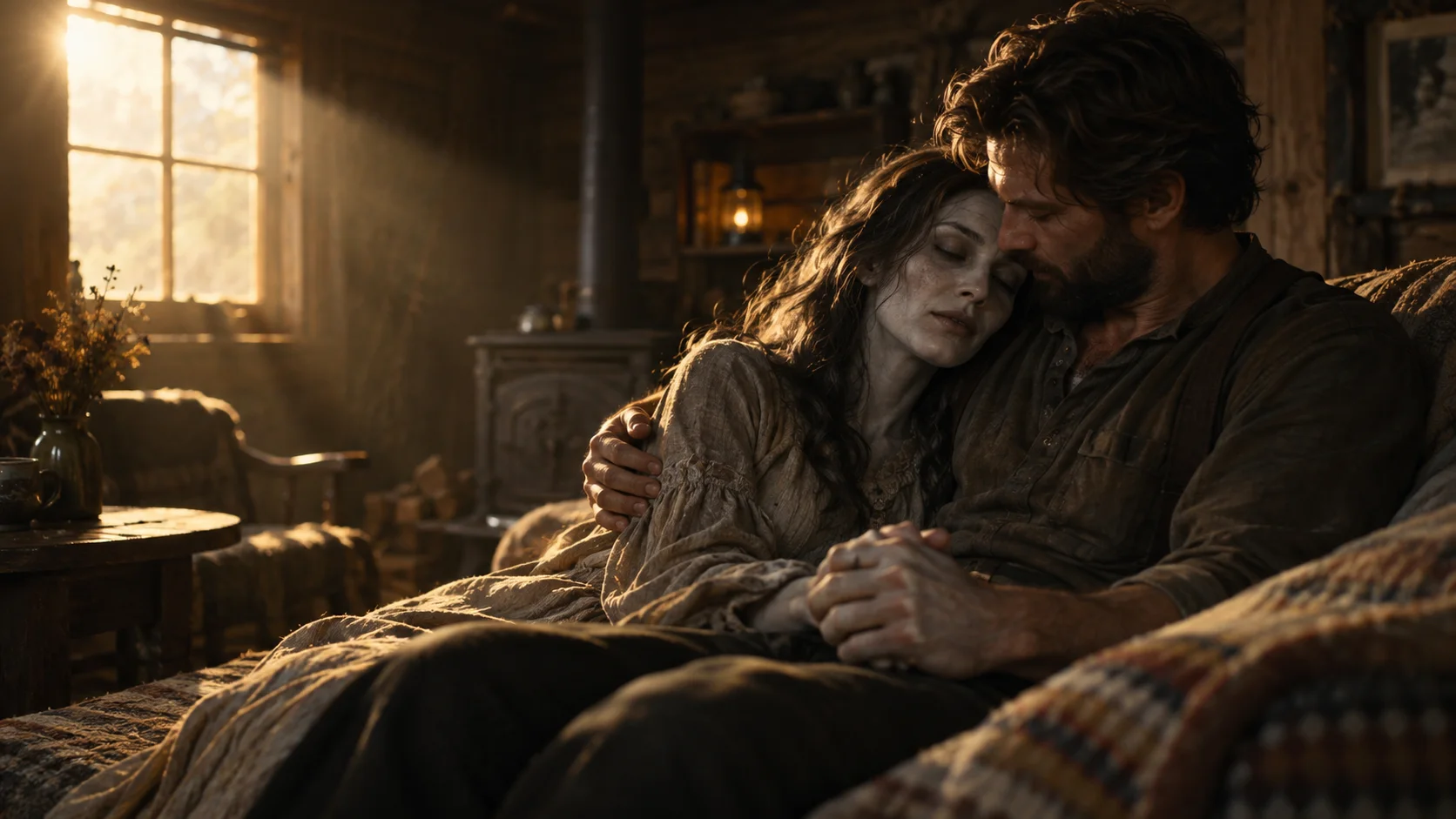
You can use this story structure without editing each scene yourself. Start your own zombie love story with two photos in the homepage generator; ZombieTrend handles the prepared 15-second story and email delivery within 12 hours of successful submission.
A love story inside an apocalypse
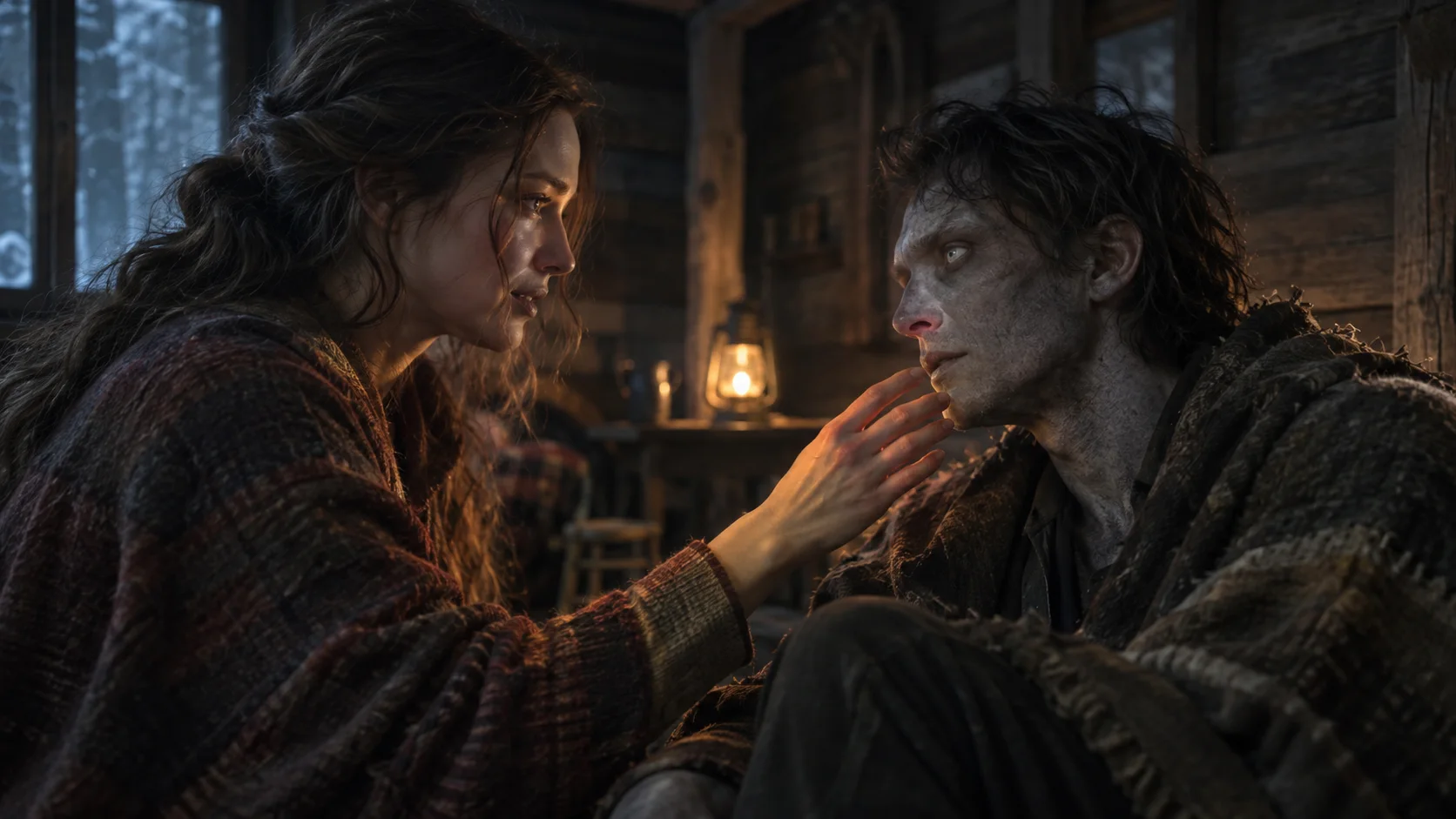
The zombie AI love story starts with a familiar horror image: someone faces a person who has turned. What changes the scene is recognition. The human sees a loved one instead of only a threat, hesitates, and chooses an embrace.
That choice makes the relationship the center of the video. The ruined setting and undead appearance matter because they put the bond under pressure. Without the moment of recognition, the clip would be a transformation effect. With it, the characters have a reason to move toward each other.
The format has different interpretations. Some clips end in the memory; others return to the confrontation. ZombieTrend's public couple example uses an embrace that carries into a bright field. Its story gives us four useful beats to examine.
Beat 1: The impossible choice
In the cabin, the human character is confronted with someone they know who has changed. The threatening situation establishes the stakes quickly. A raised weapon and a hesitant posture communicate conflict without needing dialogue.
The important visual information is who is facing whom. Both identities need to remain readable. Too many extra characters or a complicated sequence would make a very short clip harder to follow.
Beat 2: Recognition
The infected character still has enough familiar features to be recognized. The human's reaction is the turning point: the person they love is still there, beneath the change.
This is why reference photos matter. Distinct faces help the relationship remain understandable as appearance, clothing, and lighting change. Clear photos are useful preparation, even though AI may still alter details. See the photo guide for practical choices.
Beat 3: The embrace
The human lowers the weapon and opens their arms. The other character approaches, and the embrace supplies a shared movement. The scene stops being only about danger and becomes about refusing to let go.
In the public example, the embrace involves a leap. A leap is not the only way to tell this kind of story: an approach, a turn, or a close hug can also create continuity in a DIY edit. Those are creative possibilities, not extra controls in ZombieTrend's creator.
Beat 4: A memory in warm light
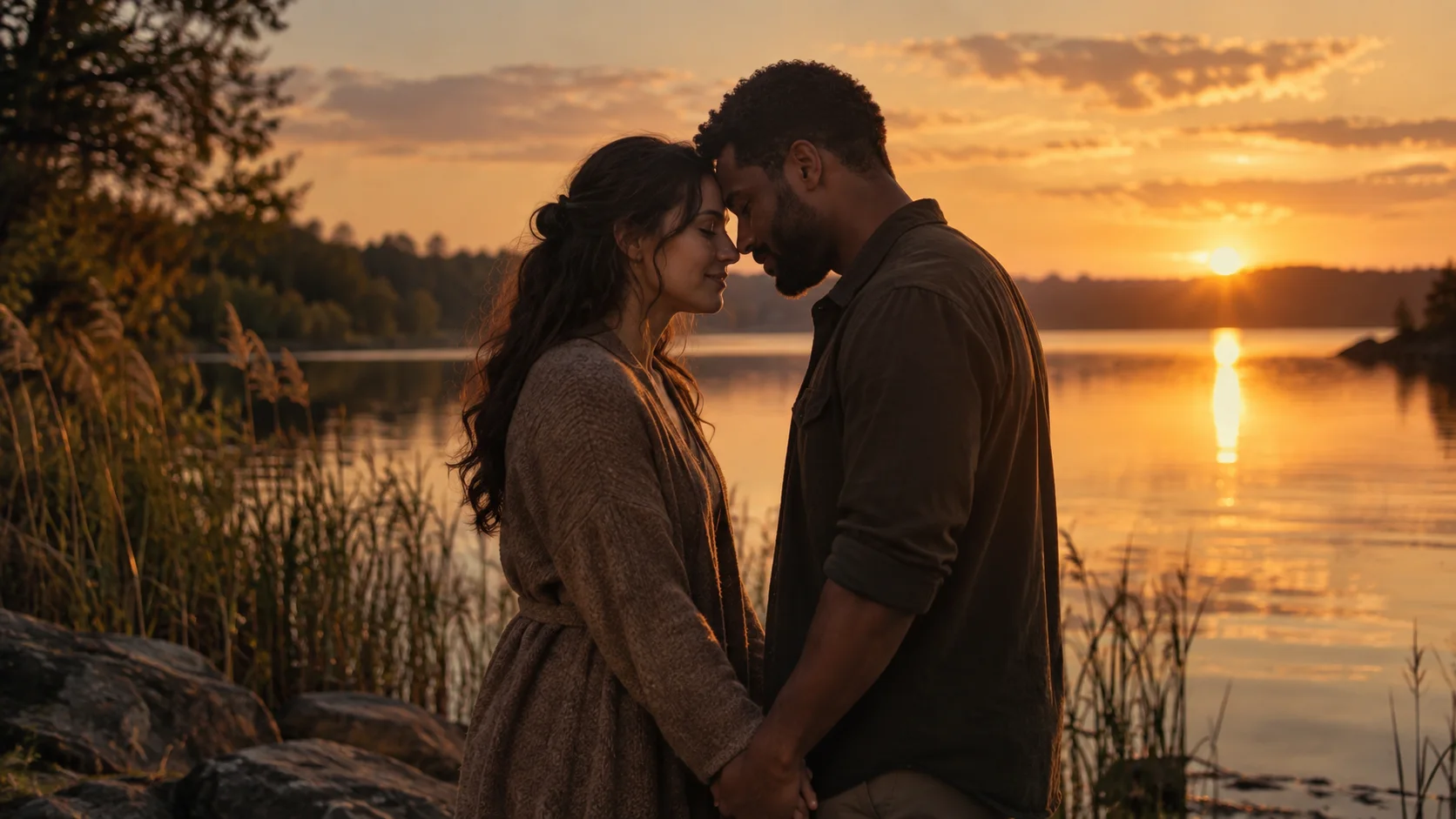
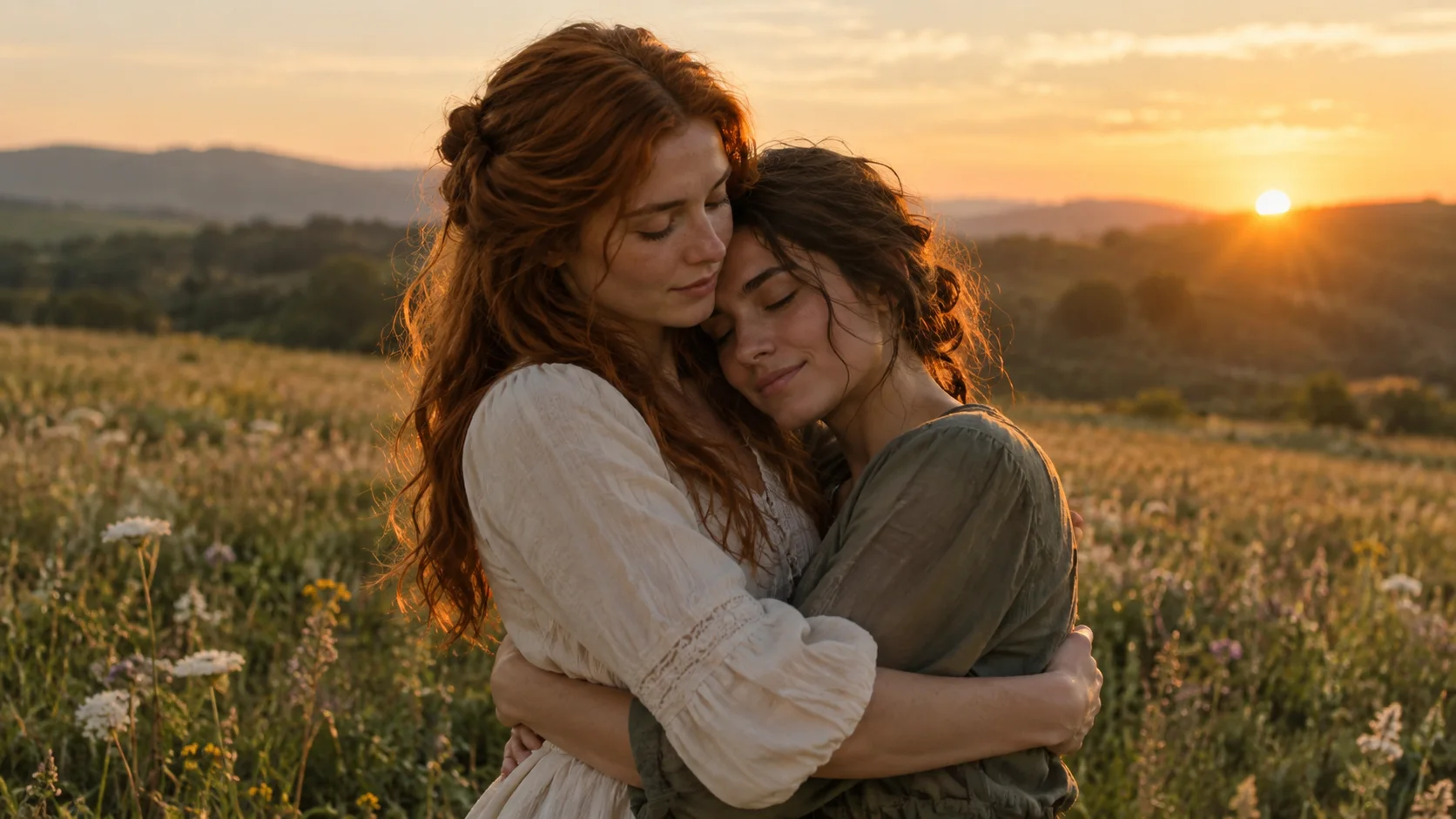
The next scene shows the same pair before the infection. The partner is healthy again, the light is warmer, and the setting feels safe. The emotional contrast supplies the ending: the people in the apocalypse once had an ordinary, happy life together.
A snowy mountain, a field, or another peaceful location can serve this idea in different creators' videos. Our public couple example uses a sunlit field. The current creator offers a prepared story rather than selectable memory locations.
What is a zombie match cut?
A match cut connects a recognizable element across an edit. Here, that element is the characters' pose and movement. The embrace begins in the cabin and continues in the memory, so the viewer reads the two shots as emotionally connected.
It helps to keep the roles, movement direction, and body positions understandable. In a DIY workflow, the final frame of one scene can guide the start of the next. Prompt Seen's two-scene tutorial describes this approach with the same reference images for both scenes.
An AI prompt can request continuity, but it cannot guarantee an exact match. Hands, faces, camera position, and timing may shift between shots. The editorial aim is a clear connection, not an unsupported promise of flawless physics.
How to personalize the feeling
Start with who the story is about. A couple's version can feel like an anniversary keepsake. A version with a close adult friend can center on loyalty. A pet version changes the relationship while keeping the same choice to hold on.
Then choose a caption or dedication to add when you share the delivered video. That is a way to make the meaning personal without implying that the creator accepts a custom script. Our couple story ideas offer starting points.
Questions about the ending
Is the happy scene happening in the present?
In the ZombieTrend story, it is a warm memory. You can read the contrast as remembering who the pair were before the apocalypse.
Is the story supposed to include gore?
The public story focuses on recognition, an embrace, and a memory. Graphic injury is not needed to understand its conflict or its ending.
Do I need to edit the transition myself?
Not when using ZombieTrend. The team makes the prepared 15-second story from your photos and emails it within 12 hours of successful submission. Follow the creation tutorial for the actual steps.
Put your relationship into the story
Create your zombie love story with two individual photos. Choose Human & zombie or Pet & me and let the team prepare the embrace and memory transition. Your 15-second video is emailed within 12 hours of successful submission.